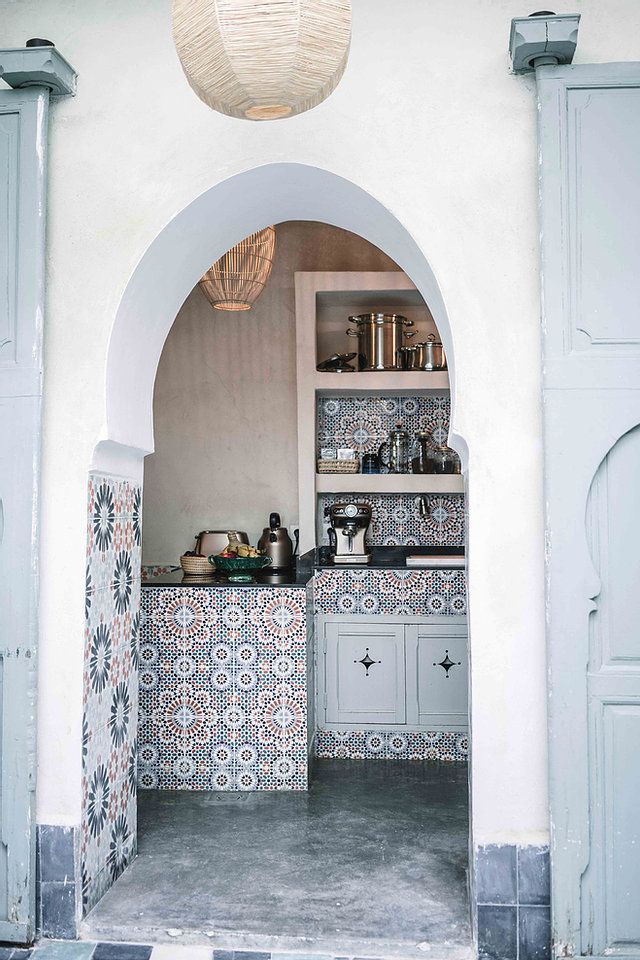
The kitchen is often described as the heart of the home, yet its place within the house varies greatly across cultures. In some homes, it is integrated into everyday family life; in others, it occupies a more secluded position. These differences are not merely functional choices but reflections of broader ideas about privacy, hospitality, and domestic labor. By comparing Moroccan and American kitchen typologies, this essay explores how the architecture of the kitchen shapes the experience of cooking and the social life that surrounds it.
Two ways of experiencing the kitchen
American kitchens are generally exposed and seamlessly connected to dining and living areas. Open-plan layouts have become a defining feature of contemporary American housing, transforming the kitchen from a service space into a social one. The popularity of the kitchen island; often associated with Frank Lloyd Wright’s efforts to integrate domestic functions more fluidly; further reinforces this shift.
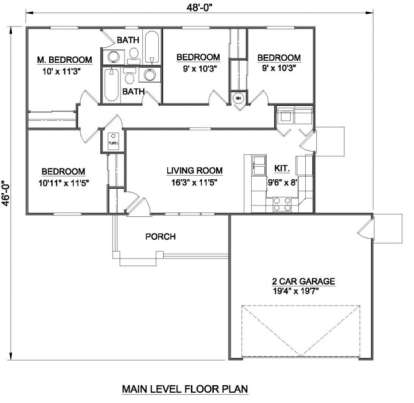
At first glance, the traditional Moroccan kitchen appears to represent the opposite condition. Often separated from reception spaces, it is commonly described as a closed kitchen. Yet this interpretation overlooks the cultural logic that shaped it. In the Moroccan house, influenced by Islamic conceptions of privacy and hospitality, the question is not whether a space is open or closed, but rather to whom it is open.
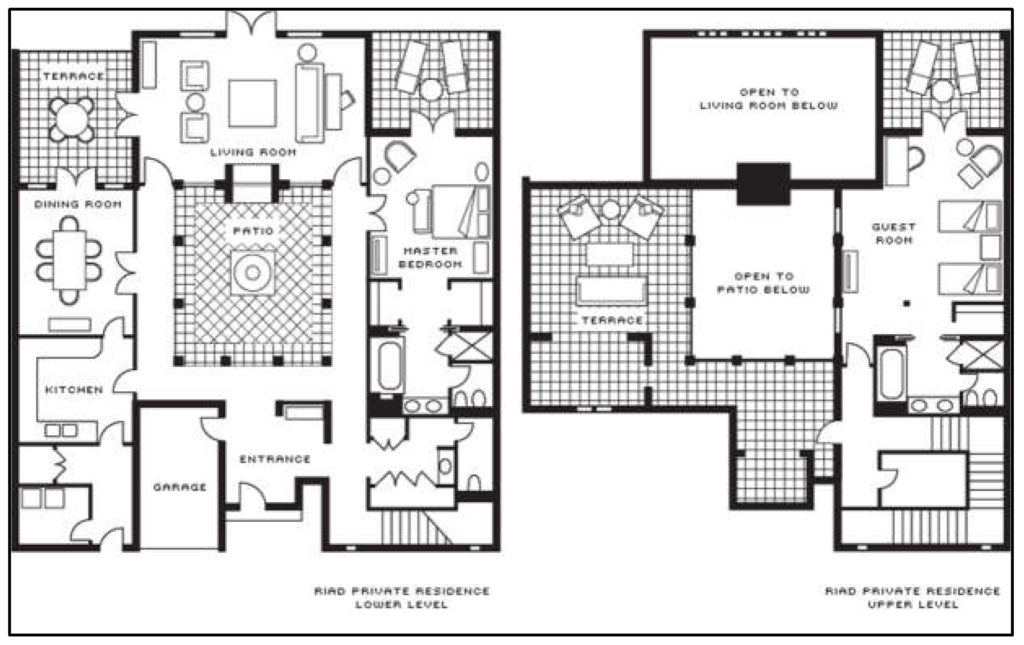
The traditional kitchen was rarely an isolated room. Instead, it often extended into the courtyard ( riad), which functioned as a semi-private communal space at the center of domestic life. Family members could gather, participate in food preparation, or move freely between spaces. Cooking was therefore not necessarily a solitary activity; it was communal within a carefully defined sphere of intimacy. While the American kitchen seeks to dissolve the boundary between cooking and socializing, the Moroccan house historically maintained a distinction between the domestic sphere and the public sphere, allowing communal participation while preserving privacy.
The standarized kitchen
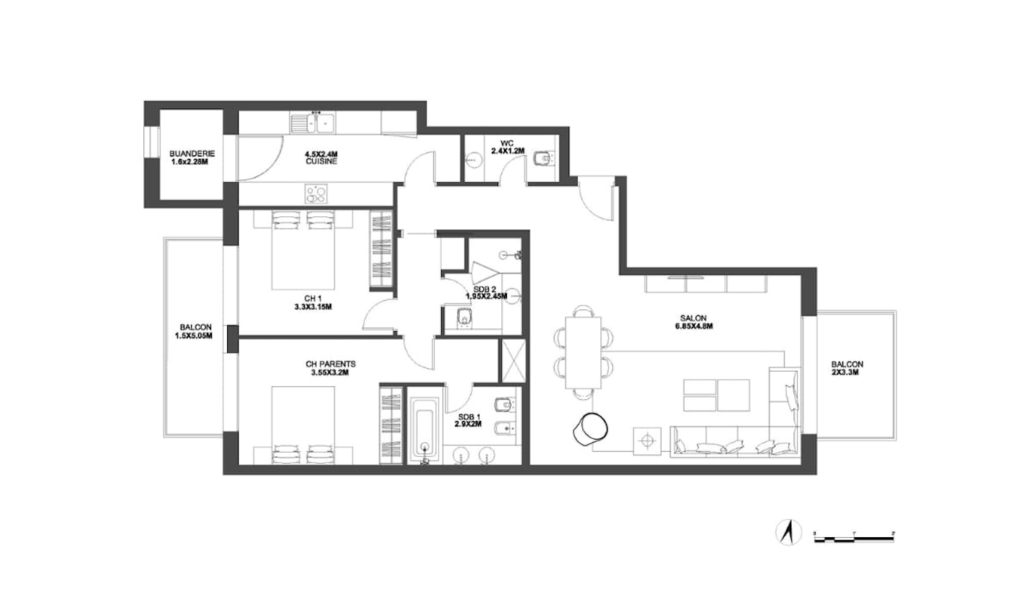
During the twentieth century, industrialization, globalization, and the standardization of housing gradually reduced many of the spatial differences that once distinguished kitchens across cultures. The modern kitchen emerged as a largely universal model characterized by standardized appliances, optimized work triangles, and increasingly similar layouts.
As Moroccan cities expanded and apartment living became more common, many traditional spatial arrangements disappeared. The courtyard, once central to domestic life, became increasingly rare, while kitchens began to resemble the standardized models found elsewhere. Yet this transformation did not entirely erase cultural habits. Residents continue to modify, appropriate, and adapt these spaces according to their own routines, revealing that culture often survives not through architecture alone, but through the ways architecture is inhabited.
Is cooking inherently a communal task?
The comparison between Moroccan and American kitchens reflects a different understanding of how domestic life should be organized. The open kitchen encourages visibility and integration, while the traditional Moroccan house offers a form of communal cooking rooted in selective intimacy rather than constant exposure.
As contemporary lifestyles continue to evolve, the question becomes less about choosing between open and closed kitchens and more about imagining new forms of domestic space. If the courtyard once served as an extension of the kitchen and a mediator between privacy and community, what architectural element might fulfill that role today? How can contemporary Moroccan housing accommodate both the desire for social interaction and the cultural importance of privacy?
Perhaps the most interesting aspect of the kitchen is that it organizes everyday life. It determines whether the person cooking remains connected to the conversation, whether preparation becomes a shared activity, and whether domestic labor is visible or hidden from view. The kitchen, far from being a simple service space, remains one of architecture’s most influential rooms.